Life–Death: Katharina Sieverding
-
介绍

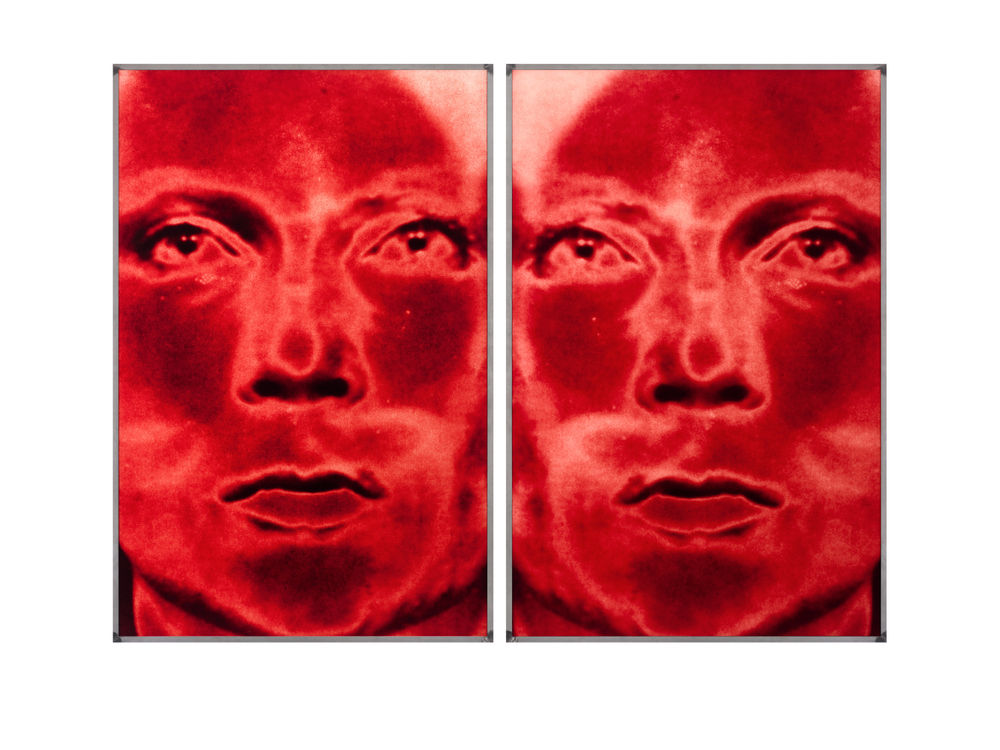
For Berlin Art Week 2026, Galerie Thomas Schulte presents the exhibition Life–Death by Katharina Sieverding. At the heart of the exhibition is the 1969 film of the same name, complemented by large-format film stills. Created in what was then West Berlin, the work reflects an early period in the artist’s practice and a historical moment of concentrated political, social, and aesthetic upheaval. Notably, Life–Death was shown at documenta 5 in Kassel in 1972—an early marker of its art-historical significance.
Within Sieverding’s filmic output, Life–Death holds a singular position. The work was shot on 16mm film during a period that was both personally and artistically formative. At the time, Sieverding was a student of Joseph Beuys at the Staatliche Kunstakademie Düsseldorf, witnessing firsthand the institutional conflicts and protest movements of the late 1960s. Filming took place shortly after the events surrounding the academy’s temporary closure—protests in which she participated both as documentarian and as active participant. Life–Death thus represents not only an aesthetic search for new visual forms but also the experience of a society in flux.
The film eschews linear narrative in favor of a sequence of portraits, body studies, and metaphorical settings. Alongside Othello, Stephan Runge, and Holger Bombusch, Sieverding appears in shifting roles and stagings. Heavy makeup, androgynous costumes, gestures of transformation, and deliberately artificial poses produce a state of perpetual transition. Opposites such as masculine and feminine, life and death, movement and stillness are not resolved but held in tension. The film’s visual language already anticipates cultural developments that would only gain wider visibility years later under terms such as glam rock, gender performance, and nonbinary aesthetics.
Sieverding’s experiences in Düsseldorf’s nightlife, particularly in the orbit of the legendary Mora’s Lovers Club, fed directly into the work. There, extravagant fashion, roleplay, gender transgression, and performative self-staging were part of the nightly routine. In the film, these practices are not documented but transposed into an independent artistic language.Music plays a central role. After an early version of the film with spoken text failed to convince, Life–Death received a new soundtrack in 1972 from the musicians of Kraftwerk, who would soon gain international recognition. The recording was produced in a single improvised studio session and documents an early transitional phase between rock, experimental sound exploration, and electronic music. Psychedelically drifting, organ-like soundscapes move through the film, lending it an almost trance-like aura. Time seems to expand, narrative structures dissolve, and image and sound merge into a complex layering. It is precisely in this union of visual and sonic transformation that the work’s exceptional contemporary relevance lies. Just as the figures oscillate between different gender roles and conceptions of identity, the music moves between acoustic and electronic sound worlds. Neither images nor sounds permit clear-cut classification. Instead, an open space of ambivalence emerges in which identity appears as something processual—as continuous movement rather than a fixed category.
At the same time, Life–Death marks a turning point in the artist’s work. The work combines performance, photography, and film into a dense visual structure, signaling a departure from Sieverding’s earlier theater practice in favor of an independent visual language. Even here, a conception of image-making emerges that would leave a lasting mark on her later work: images appear not as closed representations of reality but as sites of transformation, where meaning is continually regenerated.
In the exhibition, this perspective gains an additional dimension through the subsequent transformation of the material. In the transition from analogue 16mm film to digital video, and through the repeated reworking of the material, the status of the original image shifts. It appears not as a historical document but as open material capable of constant reconfiguration. At Galerie Thomas Schulte, this gives rise to a richly layered image space: the dual-channel projection of the film enters into dialogue with large-format film stills and photographic tableaux—immediate traces of a moment that had already begun to change in the instant of its capture. Against the backdrop of today’s visual cultures, Life–Death feels remarkably present. In an era of relentless image production, algorithmic visibility, and AI-generated imagery, the questions Sieverding posed as early as 1969 feel more urgent than ever: How are identities shaped through images? How do technical media transform our perception? And how can meaning be kept open rather than fixed?
The exhibition thus treats Sieverding’s work not merely as a historical document of an avant-garde generation but as a work of remarkable contemporary urgency. Its productive ambivalence holds the poles of life and death, past and present, in suspension. It is precisely here that the intellectual and aesthetic rigor of this artistic practice lies—a practice that has lost none of its tension to this day.
Text by Annika Karpowski -
安装图示
-
作品
-
-
Inquire about works by Katharina Sieverding
-
参展艺术家